

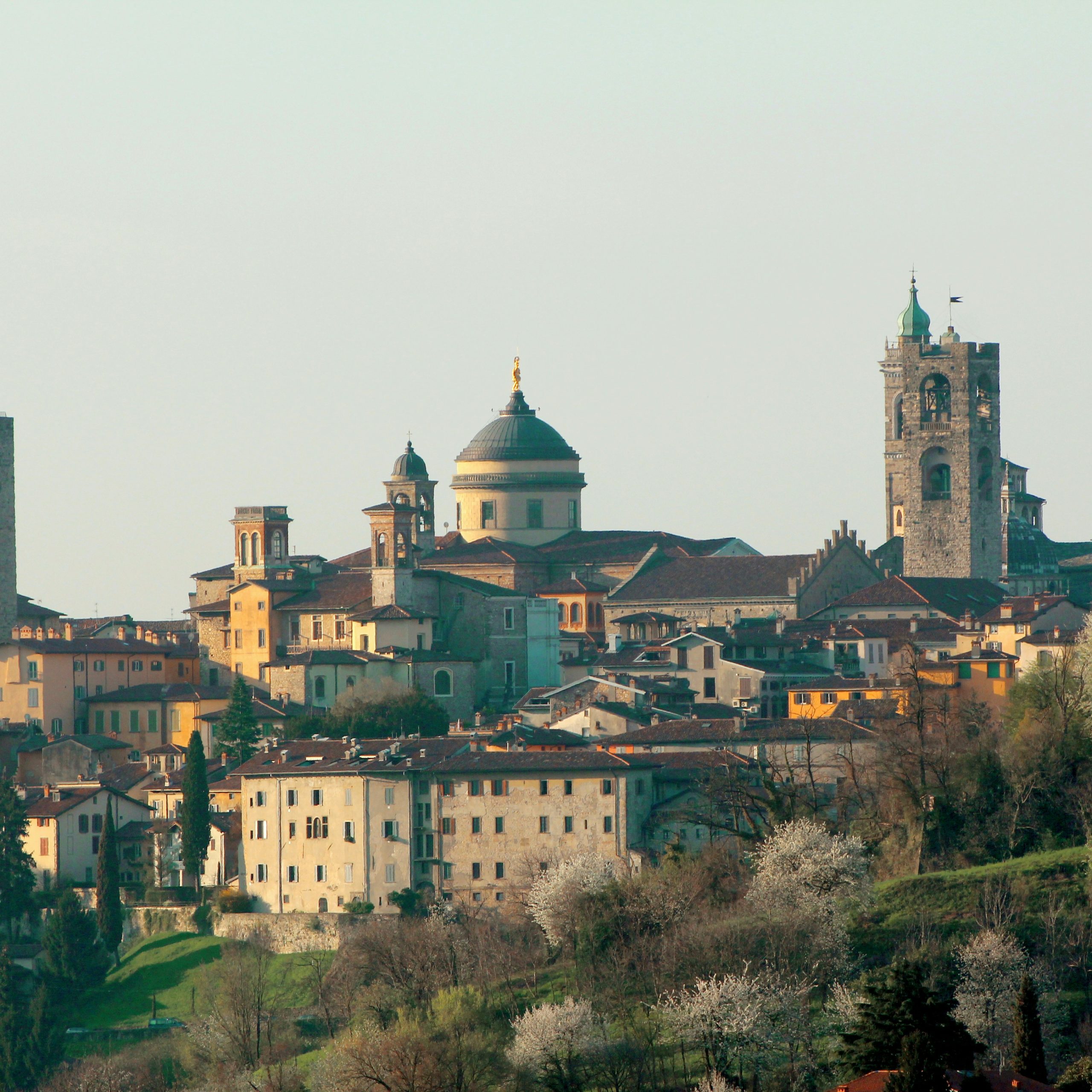
Bergamo is defined by the connection between its upper and lower levels rather than by a single historic core. It develops across a contemporary lower town and Città Alta, the historic upper city enclosed within Venetian walls.
Anyone exploring what to see in Bergamo quickly realizes that the experience depends as much on moving between these two areas as on the landmarks themselves. Even the short climb from Città Bassa to Città Alta changes the rhythm and atmosphere of the city.
Bergamo Old Town: top attractions & things to see in Città Alta
Città Alta sits on the hill above the plain and is enclosed by the Venetian walls. It has developed over centuries through civic, religious, and defensive layers that are still visible in its compact urban form.
Movement follows short connected paths rather than long streets or continuous axes. Squares, passages, and buildings are tightly spaced, creating a compact urban fabric that is easy to read on foot.
For those looking at what to see in Bergamo, Città Alta is the area where elevation and architecture define the way you experience the city.
Key places in Città Alta
- Piazza Vecchia: civic heart of the upper city, where architectural continuity and public life intersect in a unified historic space.
- Piazza Duomo: the religious core of Città Alta, home to the Cathedral and the Basilica di Santa Maria Maggiore, forming one of the most significant historical ensembles in northern Italy.
- Colleoni Chapel: renaissance architectural jewel integrated into the same compact civic-religious system.
- Venetian Walls: UNESCO–listed fortifications that define the perimeter of the old city and shape its relationship with the landscape.
- Rocca di Bergamo: historic fortress and elevated viewpoint overlooking both the city and the surrounding plain.
- San Vigilio viewpoint: natural extension of the upper landscape, offering a wider perspective beyond the historic core.
Bergamo Lower Town (Città Bassa): top attractions & things to see
Città Bassa extends across the plain as the more recent part of Bergamo’s development. Its layout follows modern planning, with broader streets, transport routes, and spaces shaped by everyday urban life.
Compared to the upper town, this part of Bergamo feels more open and regular, with a slower transition between spaces and a rhythm shaped by daily life rather than historical concentration.
The connection with Città Alta remains present throughout the city, not as a separate element but as a constant visual reference in the background.
Key places in Città Bassa
- Sentierone: the main pedestrian promenade and social axis of the lower city, structured around everyday public life and seasonal events.
- Piazza Matteotti: civic and administrative heart of Città Bassa, acting as one of its main urban reference points.
- Centro Piacentiniano: early 20th-century rationalist–style district, representing a key moment in Bergamo’s modern urban planning.
- Via XX Settembre: primary commercial street connecting the railway area with the historic center, forming one of the city’s main urban flows.
- Funicular to Città Alta: the historic connection between lower and upper city, marking the transition into the old town experience.
How many days in Bergamo and how to plan your time
When deciding what to see in Bergamo, the city works well both as a one–day visit and as a slower multi–day stay. Most visitors spend between 1 and 3 days in the city, depending on how deeply they want to explore its historic and contemporary areas.
- 1 day is enough to experience the main structure of Città Alta and its key landmarks.
- 2-3 days allow a more complete exploration of both upper and lower city.
- Longer stays leave more time for slower exploration and nearby destinations.
A practical way to plan your time in Bergamo
1 day in Bergamo
Focus on Città Alta and its main historic structure: Piazza Vecchia, the Cathedral complex with Santa Maria Maggiore and Colleoni Chapel, Rocca di Bergamo with its viewpoints, and the Venetian Walls.
2 days in Bergamo
- Day 1: focus on Città Alta, including Piazza Vecchia, the Cathedral complex, Rocca di Bergamo, and the Venetian Walls.
- Day 2: explore Città Bassa, including Sentierone, Piazza Matteotti, Centro Piacentiniano, and Via XX Settembre, with views back toward Città Alta.
3 days in Bergamo
- Day 1: Città Alta with its historic core and main landmarks.
- Day 2: Città Bassa and its contemporary urban structure.
- Day 3: San Vigilio viewpoint, Museo Donizettiano, and slower exploration across both upper and lower city.
When is the best time to visit Bergamo
Bergamo can be visited year-round, but the experience changes depending on season and atmosphere.
- Spring (April to June): mild weather and lively city life. Ideal for exploring both Città Alta and Città Bassa.
- Summer (July and August): warm temperatures and a more relaxed urban rhythm, especially in August when the city is quieter. Early mornings and evenings are the best moments to experience both Città Alta and Città Bassa.
- Autumn (September to October): stable weather and clear views over the plain. A strong season for food and relaxed exploration.
- Winter (November to February): cooler and quieter. Città Alta becomes more atmospheric, with mist and softer light enhancing its historic character.
Traditional dishes to try in Bergamo
Bergamo’s cuisine reflects its position between the Alpine valleys and the Lombard plain, where mountain traditions and local agriculture have shaped everyday cooking over time.
Across both Città Alta and Città Bassa, trattorias, osterias, and local markets still serve traditional regional recipes built around butter, polenta, local cheeses, seasonal ingredients, and slow-cooked meats.
- Casoncelli alla bergamasca: fresh filled pasta typically served with butter, sage, and pancetta, considered one of Bergamo’s most traditional dishes.
- Polenta taragna: traditional mountain–style polenta made with buckwheat flour and melted local cheeses, typical of the alpine valleys around Bergamo.
- Polenta e brasato: slow–cooked beef served with soft polenta, deeply connected to the region’s rural and mountain cuisine.
- Stracciatella alla bergamasca: light egg–based soup traditionally prepared as a simple and comforting homemade dish.
- Formaggi delle Orobie: regional cheeses from the surrounding mountains, often served with cured meats or as part of local antipasti.
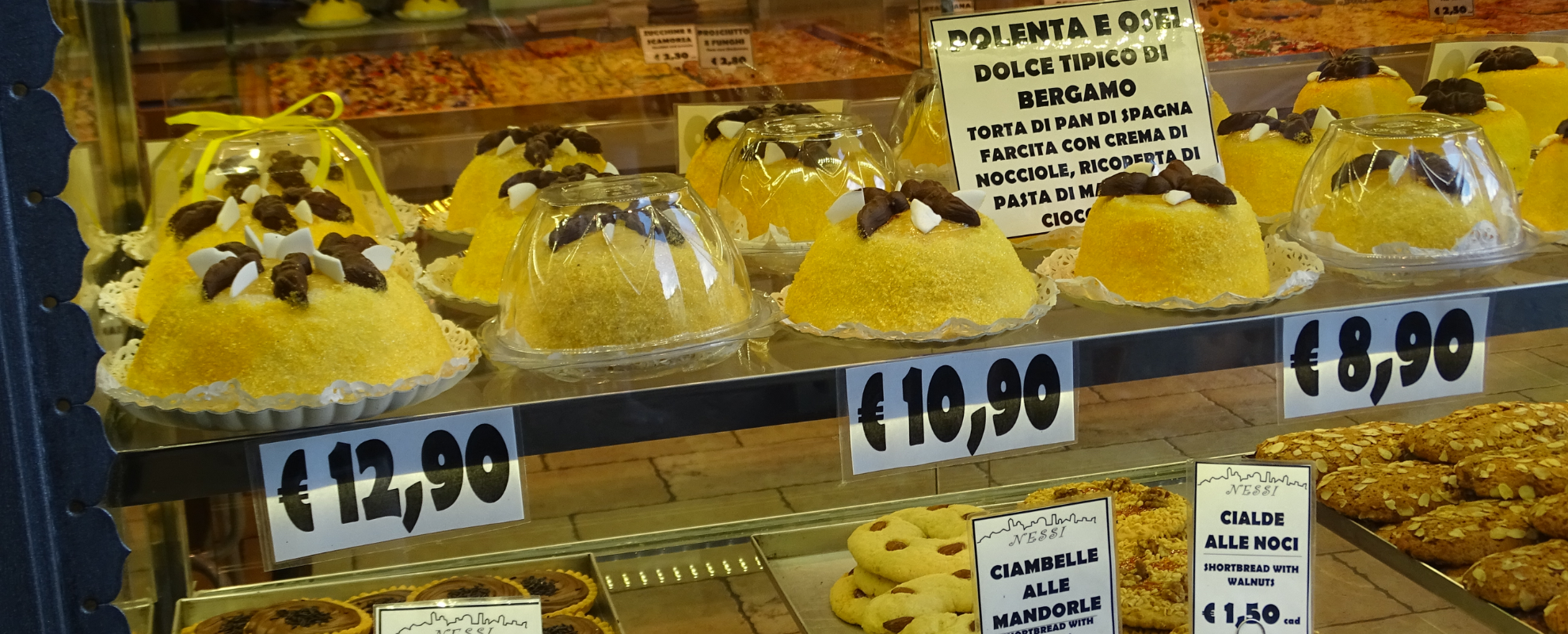
- Polenta e osei: traditional Bergamo dessert shaped like a small dome of polenta, but made with sponge cake and marzipan, typically topped with small chocolate birds (“osei” in Bergamasque dialect), combining playful appearance with rich almond and chocolate flavors.
Day trips from Bergamo
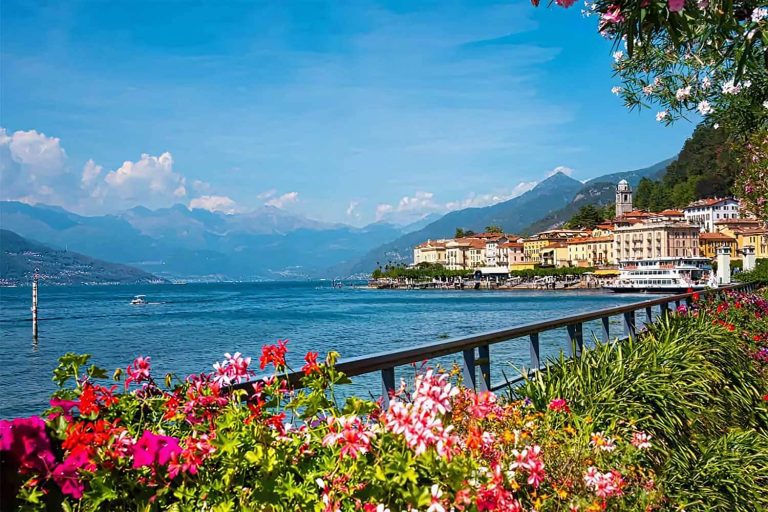
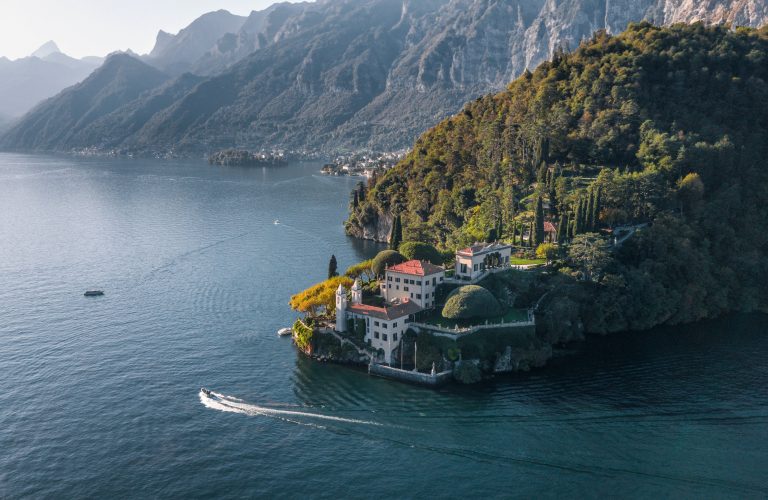
When planning what to see in Bergamo, it’s also worth looking beyond the city, as its position in Lombardy makes it a convenient base for exploring nearby lakes, valleys, and small historic towns.
Lake Iseo, Val Brembana, and Val Seriana each offer a different landscape, from lakeside scenery to alpine routes and quieter mountain areas.
Most of these destinations are within a short distance from Bergamo, making them easy options for a slower day outside the city.
Bergamo as a layered urban experience
Bergamo is shaped by the connection between Città Alta and Città Bassa, two closely connected areas with very different rhythms and atmospheres.
Moving between them changes the pace and perspective of the city, from the compact historic spaces above to the more open and contemporary layout below.
FAQ
Essential questions about visiting Bergamo
Is Bergamo worth visiting?
Yes, especially if you are interested in cities with a clearly readable historic structure. Bergamo combines a UNESCO–listed upper town with a contemporary lower city, creating a layered urban experience rather than a single historic center.
What is Città Alta in Bergamo?
Città Alta is the historic upper city, enclosed by Venetian Walls. It contains Bergamo’s main landmarks, including Piazza Vecchia, the Cathedral complex with Santa Maria Maggiore, Colleoni Chapel, Rocca di Bergamo, and panoramic viewpoints.
How do you get to Bergamo Alta?
The most common access is the historic funicular from Città Bassa. It connects directly to the upper city, but Città Alta can also be reached on foot through the city gates or pedestrian paths.
How much time do you need in Bergamo?
One day is enough for Città Alta. Two to three days allow a complete experience of both upper and lower city, including viewpoints, cultural spaces, and slower exploration.
What is the best way to explore Bergamo?
The most complete way is to focus on Città Alta, exploring its main landmarks, viewpoints, and historic streets through a guided tour such as the Bergamo Alta Experience, which connects its architecture, history, and hidden corners.
Is San Vigilio worth visiting?
Yes. San Vigilio is an elevated viewpoint above Città Alta and offers a wider perspective over the entire urban system and surrounding landscape.
Is Rocca di Bergamo worth it?
Yes. The Rocca is both a historic fortress and one of the main panoramic points over Città Alta and the plain.

Comment (0)