

Bellagio is home to some of the most iconic villas on Lake Como, where architecture, gardens, and natural scenery exist in continuous dialogue.
For those interested in villas in Bellagio, Lake Como, Italy, places such as Villa Melzi and Villa Serbelloni, together with other historic residences across the area, show how the lake has been experienced as a landscape shaped through movement, elevation, and proximity rather than a static view.
The most beautiful Villas in Bellagio to visit
The villas of Lake Como are often associated with elegance and scenic beauty, but in Bellagio they also show how the landscape has been interpreted through architecture, gardens, and perspective.
Rather than dominating the surroundings, they were positioned to interact with the lake, shoreline, and mountains.
Among the most representative Bellagio villas, Villa Melzi and Villa Serbelloni represent two complementary experiences.
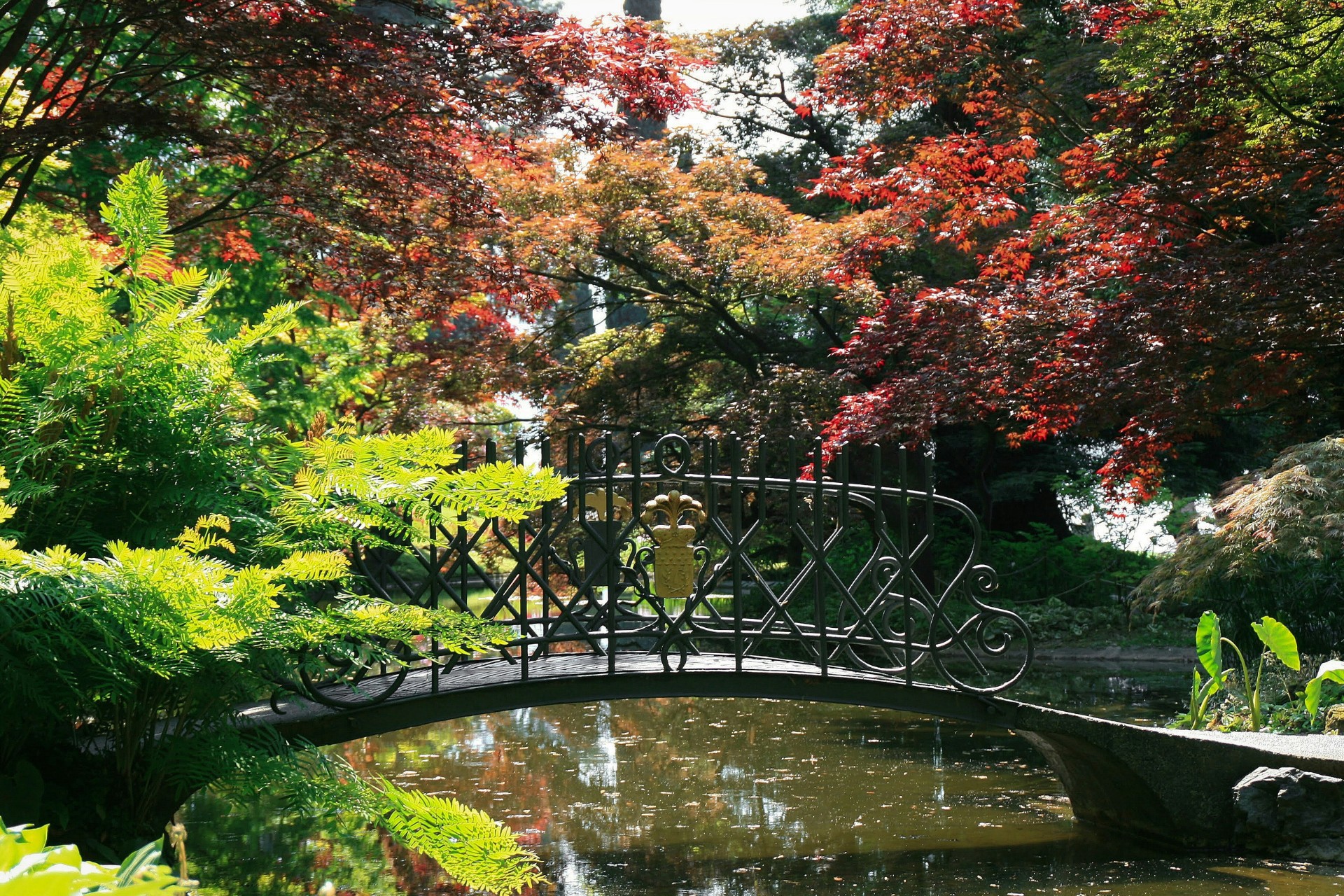
Villa Melzi: continuity along the water
Villa Melzi d’Eril was commissioned in the early 19th century by Francesco Melzi d’Eril, vice president of the Italian Republic under Napoleon. Its neoclassical architecture reflects the period, but the defining element is its relationship with the lakeshore.
Its gardens develop through a continuous horizontal sequence:
- tree-lined avenues running parallel to the lake;
- sculptures and botanical elements along the paths;
- subtle changes in light and reflections reinforcing the continuity of the landscape.
Because of this structure, movement becomes central to the experience. The landscape is never fully revealed at once, but unfolds through shifting relationships between water, vegetation, and architecture.
This is what makes Villa Melzi one of the most immersive villas in Bellagio: through continuity rather than monumentality.
Villa Serbelloni: Bellagio from above
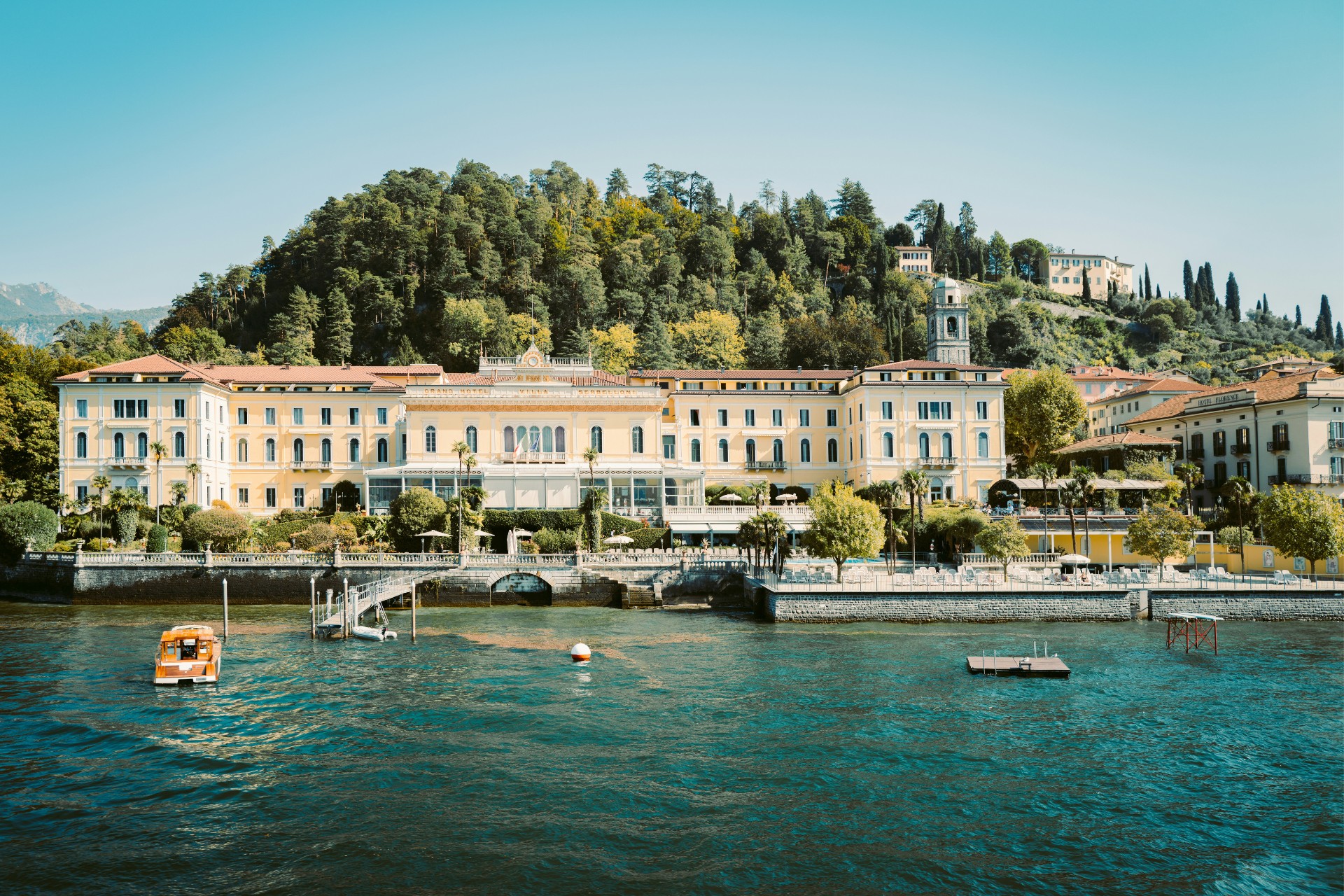
Today associated with the historic Grand Hotel Villa Serbelloni, the estate occupies one of the highest viewpoints in Bellagio.
The surrounding park develops through terraces, wooded paths, and elevated viewpoints shaped by topography rather than symmetry.
Here the relationship with the lake shifts upward:
- paths climbing through layered vegetation and shaded areas;
- views gradually opening with elevation;
- the lake transforming into a readable geographic structure.
From the highest points, both branches of Lake Como become visible at once, making Bellagio’s central position immediately understandable.
Unlike Villa Melzi, where the landscape is experienced through continuity and proximity, Villa Serbelloni is defined by elevation, distance and perspective.
Villa Giulia
Located near the lakeshore, Villa Giulia reflects the quieter and more residential dimension of Bellagio’s historic villas.
Surrounded by gardens and mature vegetation, the residence developed during the 19th century as part of the aristocratic landscape that gradually shaped the town’s relationship with the waterfront.
Although not regularly open to public visits, Villa Giulia still contributes to the architectural identity of Bellagio, where villas were often conceived as extensions of the surrounding environment rather than isolated monumental buildings.
Villa Trotti
Villa Trotti occupies a more secluded position within Bellagio and preserves the character of smaller historic residences historically connected to the lake’s aristocratic culture.
Less monumental than Villa Melzi or Villa Serbelloni, the villa reflects another recurring element of Lake Como’s landscape: private estates integrated into wooded areas, with paths and natural clearings designed to engage subtly with the shoreline and surrounding scenery.
Understanding Bellagio through movement and perspective
The same relationship between landscape, movement, and perspective that defines Bellagio’s historic villas can also be experienced throughout the town itself.
Set where Lake Como divides into two branches, Bellagio is structured vertically, with movement between waterfront and upper levels.
In the historic center, this same logic becomes physical:
- stairways connecting different levels of the town;
- narrow streets opening onto partial lake views.
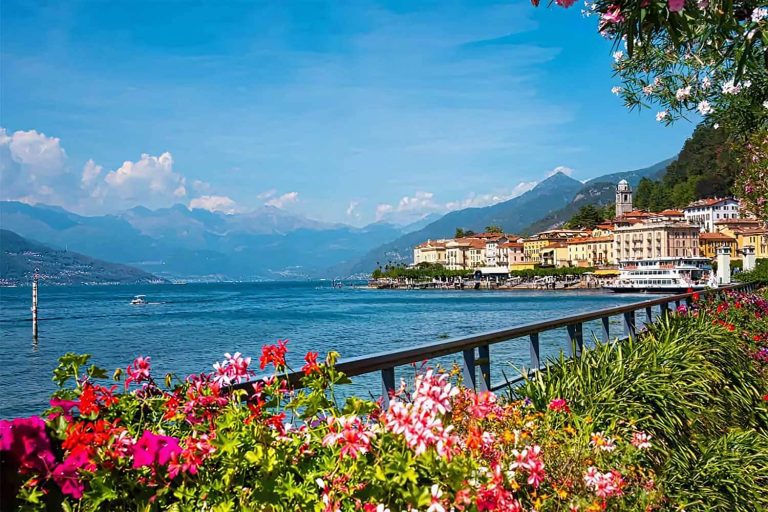
At the lower level, the waterfront introduces a slower rhythm, with broader views extending across both branches of Lake Como and toward the surrounding villages.
This constant variation of perspective is what distinguishes Bellagio, where the landscape shifts continuously through movement rather than being perceived from a single fixed point.
So, is Bellagio worth visiting? Yes, especially for travelers interested in more than scenery; where architecture, geography, and movement come together across Lake Como.
Exploring Lake Como from Bellagio
Bellagio is one of the most practical starting points for exploring Lake Como. Its central position allows direct connections across the lake, especially between mid-lake destinations.
Main routes usually include:
- Varenna: quieter atmosphere and a more linear waterfront structure.
- Como: larger urban center and southern gateway to the lake.
- Mid–lake villages: connected through short ferry crossings, with historic gardens and villas including Villa Carlotta in Tremezzina.
Traveling by water preserves the visual continuity of the landscape, where villages, gardens, and mountains remain connected throughout the journey.
Visiting Villas in Bellagio, Lake Como, Italy
Exploring the villas of Bellagio means experiencing different interpretations of Lake Como itself, from gardens unfolding along the shoreline to elevated viewpoints overlooking both branches of the lake.
Between historic residences, waterfront paths, and navigation routes connecting nearby villages, Bellagio offers one of the most layered cultural landscapes on Lake Como.


Comment (0)